Everything I know about mummies (with tattoos) - Ötzi
- Nov 28, 2025
- 2 min read
Updated: Dec 2, 2025
I'm studying tattooing techniques and its history as part of my self-imposed lessons schedule. And on the very first day of studying, I found out that the history of tattooing goes all the way back to prehistoric times.
It’s well known that tattoos began with a manual technique (hand poke) and that they have been a common practice in many tribes and cultures around the world.
But what might not be so well known (unless you’re a history nerd or a tattoo nerd) is that the earliest evidence of tattoos is a 5,300-year-old mummy with 61 tattoos 😯
Ötzi, the Iceman, died in the Alps at age 46, shot in the back with an arrow — but the mystery of his murder is one we’ll save for another time.
Two hikers found Ötzi in 1991, and that discovery changed history.
Ötzi is the oldest naturally preserved human mummy in Europe, and studying him has provided invaluable insight into the Neolithic and Copper Age in Europe.
One of those insights was the discovery of 61 tattoos across his body, making him the earliest known tattooed man to date.
His tattoos are very simple — seven repeated designs in different areas of the body: vertical lines in groups of one, two, three, four, and seven, plus two small crosses.

(In the image, a recreation of Ötzi’s tattoos by Totemic Tattoos — you can see the original post here.)
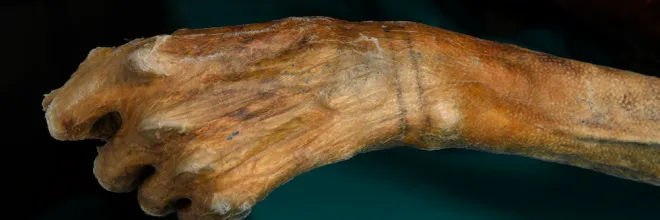
My favorite is the almost-bracelet on his wrist made of two parallel lines. It would’ve been the only one visible with clothing on.
It’s known that most of his tattoos (all except one on the torso) are located on parts of the body where Ötzi suffered various medical conditions.
For example, many of them are on joints that show signs of arthritis.
Others line up with areas used in traditional acupuncture, even though acupuncture, as we understand it today, is much more recent (around 100 BC).
So, with all this, the most accepted theory is that these tattoos were made for therapeutic, medicinal purposes. And that the design itself isn’t particularly important, or at least, the meaning behind each design hasn’t been understood yet.
And even though tattoos today aren’t used as therapeutic puncture techniques, I think they still often serve a therapeutic purpose, now on a spiritual and emotional level.
We get tattooed with things we want to remember or manifest. A tattoo can help you close chapters, move on, and remind you of a bigger goal. Sometimes we get tattooed just because we like the design, but in the end, we do it because it’s beautiful and we seek beauty, because it’s funny and it makes us laugh, etc.
I could keep reading, writing, or talking about Ötzi (and other mummies with tattoos) for hours. But I’ll stop here — if you made it this far, you deserve a round of applause.
For anyone interested, here are some photos of Ötzi and his tattoos:

Sources:
Complete mapping of the tattoos of the 5300-year-old Tyrolean Iceman
Acercándonos al mundo del tatuaje en la prehistoria: un caso experimental en torno a los tatuajes de Ötzi.

Comments